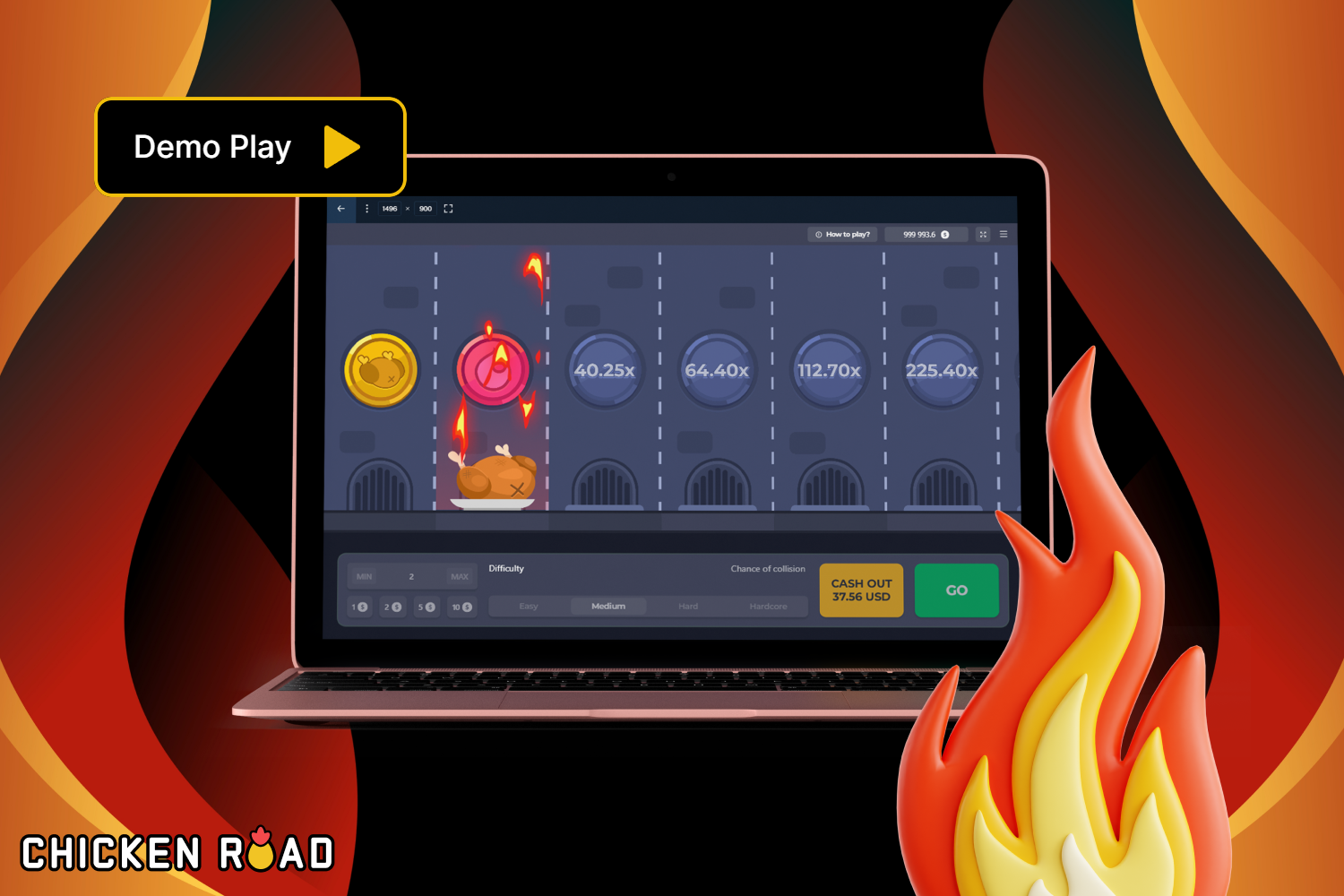
Chicken Road transforms a simple childhood question and morphs it into a tense, multiplier‑driven crash game. In place of spinning reels, we watch a chicken endeavor to cross a busy motorway while a rising multiplier tracks the growing reward. The central hook is the instant prize trigger: the moment we decide to lock in a win before the round ends abruptly. Understanding how these triggers work, when they appear, and what influences their timing is the key to moving from casual play to informed decision‑making. This article breaks down every aspect of instant prize triggers inside Chicken Road, from the core cash‑out mechanic to any secondary surprise features, so we can tackle each round with clear expectations.
The way Chicken Road Transforms Crossing into Cash
Chicken Road falls into the crash‑game group, where a multiplier rises from 1.00× onward and the round can stop at any moment. Visually, a chicken scuttles across a road while cars zoom past. The multiplier number climbs in real time, and our potential payout equals our stake multiplied by the current value. There are no paylines, reels, or symbol combinations. Instead, the entire game loop hinges on a single decision: when to trigger the instant prize by pressing the cash‑out button. The longer we wait, the higher the multiplier, but the risk of a sudden crash increases with every fraction of a second.
The theme is light‑hearted yet suspenseful. Cartoon‑style graphics, honking sounds, and the chicken’s frantic pace build an atmosphere that conceals a serious mathematical structure. Each round is independent, and the crash point is determined by a provably fair algorithm. This means we can verify that the outcome was not manipulated. The game’s simplicity makes it approachable, but the depth lies in the psychology of the cash‑out moment. We are constantly weighing greed against fear, and the instant prize trigger is the only tool we have to exit with a profit.
Contrasting Instant Prize Triggers In Crash Games
While Chicken Road has its unique character, the instant prize trigger concept appears in the crash‑game genre. Games like Aviator, Spaceman, and JetX all utilize a rising multiplier and a cash‑out button. What distinguishes Chicken Road is the thematic integration of the chicken’s journey and the potential for random bonus drops. In Aviator, for example, the instant prize trigger is purely manual or auto cash‑out, with no in‑round collectibles. Chicken Road’s golden egg mechanic adds a second trigger layer that can pay us even if we stay in for a high multiplier.
Another distinction is the visual feedback. In many crash games, the multiplier is an abstract curve on a graph. Chicken Road grounds the action in a physical scene, which can make the instant prize trigger feel more tangible. The moment we press cash‑out, the chicken safely gets to the other side. This narrative closure reinforces the trigger’s significance. From a mathematical standpoint, however, all crash games share the same core dynamic: the instant prize trigger is the only way to exit with a profit, and its timing dictates the session outcome.
Return to Player and Volatility: What the Figures Tell Us About Instant Prizes
Player return (RTP) in Chicken Road generally ranges between 96% and 97% for the base game, though the exact figure is determined by the operator’s configuration and any side‑bet options. This percentage indicates the long‑term expected payback across all rounds, including those concluded with manual cash‑outs, auto cash‑outs, and crashes. The RTP is not a guarantee per session, but it tells us that the game’s mathematics are built to return most of the wagered money over time. Instant prize triggers do not alter the RTP; they are the mechanism through which the RTP is delivered.
Risk level in Chicken Road is best categorized as medium to high. The crash point distribution means many rounds end at low multipliers, while a few reach extreme heights. This generates a pattern where small, frequent wins are possible if we cash out early, but chasing large multipliers leads to longer losing streaks. The instant prize trigger is the tool that enables us to determine where on that volatility spectrum we want to operate. Consistently cashing out at 1.50× produces a high hit rate with low variance, while targeting 10.00× or above turns the game into a high‑volatility pursuit where patience and bankroll management become critical.
When extra instant prize features like golden eggs or bonus buys are present, they often carry their own RTP contribution. A bonus buy round might have a slightly different return, sometimes higher or lower than the base game. We should always check the game’s information panel, which usually displays separate RTP values for the main game and any purchasable features. Understanding these numbers assists us in assessing whether buying instant prize rounds is mathematically sound or merely a shortcut that costs extra in the long run.
Common Mistakes When Employing Instant Prize Triggers
Even experienced players can stumble into traps that compromise the performance of the instant prize trigger. Identifying these errors is the first step toward avoiding them. The most common mistake is pursuing losses by raising the bet size after a crash. This places pressure on the next instant prize trigger to provide an excessive return, which rarely happens. Instead, we should keep steady bet sizing and let the mathematics unfold over many rounds. The trigger is a tool, not a recovery mechanism.
Another error is establishing an auto cash‑out too proximate to the round’s start and then manually overruling it out of greed. We might see the multiplier surpass 1.20× and decide to cancel the auto trigger, only to watch the round crash seconds later. If we have chosen an auto cash‑out, we should either stick with it or not use it at all. Mixed signals lead to missed instant prizes. The same holds true for bonus buy features: acquiring an instant prize round and then second-guessing the cost mid‑session disturbs our bankroll plan.
Neglecting the game’s information panel is also a frequent oversight. The RTP, volatility indicators, and details about extra instant prize features are all there for a reason. Without checking these, we might act under false assumptions about how often golden eggs appear or what the bonus buy RTP is. The instant prize trigger works best when we understand the full rule set. Allocating two minutes to read the paytable before playing can avert costly misunderstandings later.
Extra Instant Prize Elements: Sudden Rewards During the Road
Aside from the standard cash‑out, some editions of Chicken Road include additional instant prize triggers that can trigger without us pressing a button. These features are intended to introduce sudden bursts of value and maintain the gameplay unpredictable. While the exact design varies by provider and game build, the common thread is that a prize shows up and is credited immediately, often paired by a brief animation. These triggers do not demand us to sacrifice the rising multiplier; they arrive on top of whatever round we are currently playing, creating moments where the risk‑reward calculation tilts in our favour.
Arbitrary Golden Egg Drops
One frequent mechanic is the random golden egg. During any round, a shimmering egg may appear on the coupon code Chicken Road. If the chicken gets to it before the crash, an instant multiplier prize is added to our balance. The egg’s value is taken from a separate prize pool and can vary from a modest top‑up to a substantial boost. Because the egg appears independently of the main multiplier, we can collect it and still continue the round, then cash out normally. This transforms the egg into a pure bonus trigger that decreases the effective cost of holding for higher multipliers.
Bonus Purchase Instant Prize Rounds
Some Chicken Road editions offer a bonus buy option that lets us obtain direct entry into a feature where instant prizes are assured. Instead of anticipating for a random trigger, we pay a fixed multiple of the base stake, and the game starts a separate screen. Here we might choose from a field of eggs, hay bales, or road signs, each containing a multiplier. The prize is shown and credited instantly. This is a different kind of instant prize trigger because it circumvents the crash mechanic entirely. The cost is clear, and the outcome is immediate, making it enticing for players who want a quick result without the tension of a climbing multiplier.
The Primary Instant Prize Trigger: Cashing Out Prior to the Crash
The primary way to obtain a win in Chicken Road is the manual cash‑out. As soon as a round starts, the multiplier starts increasing from 1.00×. A prominent “Cash Out” button stays active until the crash takes place. Pressing it instantly closes the round at the shown multiplier, and our balance updates immediately. This is the core of an instant prize trigger: a conscious action that fixes a reward without any intermediate steps. The payout is computed as stake × current multiplier, and the funds are ready straight away. There is no holding period, no bonus screen, and no additional mechanic.
What makes this trigger fascinating is its twofold nature. On one hand, it gives us full control over the outcome. On the other hand, the crash point is arbitrary, so we can never be sure whether holding for one more tick will multiply our money or wipe out the round. The game does not telegraph the crash. Cars may veer, the chicken may falter, but these animations are visual and do not foretell the end. The only trustworthy signal is the multiplier itself, and the instant prize trigger stays our single method of transforming potential into actual winnings.
Auto cash‑out is a variant of the same trigger. We can set a target multiplier before the round commences, and the game will instantly execute the cash‑out when that level is reached. This removes the need for split‑second reactions and guarantees we never miss a planned exit point. However, if the crash takes place before the target is hit, we lose the stake. The auto cash‑out is nevertheless an instant prize trigger; it simply transfers the timing to a pre‑set rule. Both manual and auto modes depend on the same core payout mechanism, and both deliver winnings the moment the condition is met.
Bankroll Strategy and the Immediate Prize Trigger
The instant reward trigger is only as effective as the bankroll that backs it. Without a defined staking plan, even a perfectly timed cash‑out can be weakened by oversized bets that reduce the balance during losing streaks. We advise dividing the session bankroll into tiny units, each being a single bet. A common guideline is to risk no more than 1% to 2% of the total bankroll per round. This guarantees that a sequence of crashes does not compel us to stop playing before the immediate prize trigger has a possibility to deliver a recovery.
When employing bonus buy instant prize rounds, the expense is larger per trigger, so the bankroll must be modified in response. We might set aside a dedicated portion of the budget particularly for acquired features. The instant reward from a bonus buy is prompt, but the profit is not assured to beat the buy‑in. Viewing these purchases as fun costs rather than certain money‑makers helps keep a sensible perspective. The immediate prize trigger, in all its variations, works best when it is part of a viable plan.
Tactical Considerations for Instant Prize Triggers
Because the instant prize trigger is entirely under our control, strategy in Chicken Road revolves around choosing exit multipliers that match our risk tolerance and session goals. There is not one correct approach, but several frameworks can help us make consistent decisions. The key is to treat each round as a distinct event and avoid letting emotions from a previous crash dictate the next cash‑out point. A structured plan turns the instant prize trigger from a reactive tap into a calculated move.
One common method is the low‑multiplier grind. We set an auto cash‑out between 1.20× and 1.50× and aim for a high volume of small wins. This approach minimizes exposure to the crash and produces a continuous stream of instant prizes. The trade‑off is that a solitary loss wipes out several wins, so we must maintain a ample bankroll to absorb the certain crashes. The instant prize trigger fires often, which can build confidence, but the profit per round is small.
Another strategy aims at medium multipliers within the 2.00× to 5.00× range. With this approach we balance the frequency of instant prizes against the size of each payout. Crashes take place more often than in the low‑multiplier style, but the rewards are larger when we succeed. Manual cash‑out is often preferred because we can react to the round’s rhythm, though auto cash‑out removes hesitation. This middle ground appeals to players who want meaningful returns without the extreme volatility of chasing double‑digit multipliers.
High‑risk play involves holding for multipliers above 10.00×. The instant prize trigger becomes a rare but exhilarating event. Most rounds will crash before reaching such heights, so bankroll preservation is critical. We might place smaller bets and accept long losing sequences, knowing that a single successful cash‑out can recover multiple losses. This style requires patience and a clear exit plan, because the temptation to hold even longer can turn a winning round into a zero. The instant prize trigger must be executed with precision, often manually, as auto cash‑out at very high targets may never be reached.
As extra instant prize features like golden eggs are available, our strategy can adjust. The inclusion of a random bonus that pays regardless of the crash point practically reduces the risk of holding for higher multipliers. We might extend our target slightly, understanding that an egg drop could offset a portion of the stake even if we are unable to cash out. Nevertheless, we should never count on these features to bail out a round; they are statistical, not assured. The core instant prize trigger stays the cash‑out button, and every other reward is extra.
A Guide to Chicken Road: A Detailed Walkthrough
Beginning with Chicken Road is simple, but perfecting the instant prize triggers requires deliberate practice. The interface is crafted to minimise friction between betting and cashing out. Below we outline the process into clear stages, emphasising where each type of instant prize trigger comes into play. Following these steps ensures we never miss a cash‑out opportunity and know precisely what is happening at every moment.
Setting the Stake and Optional Auto Cash‑Out
Before a round begins, we set the bet amount using the plus and minus buttons. This is also the moment to set up an auto cash‑out multiplier if we wish the game to activate an instant prize automatically. We can leave this field empty to rely solely on manual control. Some interfaces also display a second bet box for a bonus side bet, which enables extra instant prize features like golden eggs. Once the stake and any auto settings are confirmed, we press the “Place Bet” button to begin the next round.
Monitoring the Multiplier and Determining When to Activate the Prize
When the round starts, the multiplier begins climbing from 1.00×. The chicken moves across the screen, and the cash‑out button remains highlighted. Our task is to watch the number and choose when to press it. The instant prize is initiated the moment we click, and the round stops for us immediately. If we have set an auto cash‑out, the game will do this for us. We can also watch for any random golden egg icons; if one emerges and the chicken collects it, an additional prize is credited instantly without ending the round.
Dealing with a Crash and Setting Up the Next Round
If the crash happens before we trigger a cash‑out, the round finishes and the stake is gone. A brief animation depicts the chicken meeting an unfortunate fate, and the multiplier halts at the crash point. The game then shows the result and prepares for a new bet. There is no way to recover a lost round, so the instant prize trigger needs to be activated before the crash. After a loss, we can adjust the stake, check our auto cash‑out settings, and put a fresh bet. The cycle restarts, with each round separate from the last.
Bet Range and Max Win Potential
Chicken Road suits a wide spectrum of budgets. The minimum bet is usually as low as 0.10 in currency units, while the maximum can reach 100 or more. This range makes the game accessible to cautious players who wish to try instant prize triggers with minimal exposure, as well as to high rollers chasing larger absolute returns. The bet amount directly affects the payout when an instant prize is triggered, so a 100.00 stake cashed out at 2.00× returns 200.00, while a 0.10 stake at the same multiplier returns 0.20. The multiplier remains the same regardless of bet size.
The maximum win is usually expressed as a multiplier cap rather than a fixed cash amount. Common caps in crash games fall between 1,000× and 5,000× the stake, though some versions of Chicken Road may push this higher. If the cap is 5,000× and we are betting 100.00, the theoretical ceiling becomes 500,000.00. However, reaching that limit requires the round to survive long enough for the multiplier to hit the cap, which is statistically rare. The instant prize trigger is the only way to lock in a win before the crash, so even a round that eventually reaches 5,000× is worthless if we do not cash out in time.
It is also important to note that some bonus buy features have their own win ceilings. A pick‑and‑click instant prize round might cap the total prize at a fixed multiple of the buy‑in cost. We should review the paytable or rules screen to identify any such limits. Knowing the maximum win enables us to set realistic expectations and steer clear of the trap of holding out for a multiplier that the game cannot actually pay.
Methods to Analyze Instant Prize Trigger Performance
Recording our data over several sessions indicates whether our quick win trigger strategy is effective. We can maintain a simple log of each game’s outcome: the payout at which we withdrew, whether we employed automatic or human trigger, the stake, and the result. Over time, tendencies appear. We may discover that we consistently cash out ahead of time and leave value on the board, or that we repeatedly override auto configurations and experience losses. The data does not lie, and it helps us improve our approach.
We must also monitor the rate of additional instant prize triggers. If golden eggs are meant to appear with a given probability, we can contrast our recorded frequency against the anticipated rate over a large group. Significant differences could indicate a misconception of the feature’s operation or merely a streak of bad outcomes. Because crash games are highly volatile by definition, immediate figures will vary. A systematic review procedure keeps us balanced and stops us from blaming the instant prize trigger for outcomes that are clearly within standard probability limits.
The importance of Verifiable Fairness in Immediate Prize Determinations
Chicken Road, like many modern crash games, uses a provably fair system to establish the crash point of each round. This is important for instant prize triggers because it assures us that the moment of the crash is not tampered with to prevent a cash‑out. Before a round starts, the game produces a cryptographic seed that, together with a client seed, produces the crash multiplier. We can verify the outcome independently after the round concludes. The instant prize trigger is our response to a genuinely random event, as opposed to a scripted sequence meant to beat us.
Understanding provable fairness offers a layer of confidence. We know that the multiplier’s climb is not decreasing or speeding up based on our behaviour. The crash point is set from the start, even though we cannot see it. This indicates our decision to trigger the instant prize at 2.13× is made under the same conditions as a decision at 1.07×. The game does not conform to our cash‑out history. For analytical players, this transparency changes the instant prize trigger from a gamble into a series of independent decisions with known statistical properties.
Psychological Dimensions of Pressing the Button
The process of activating an immediate prize in Chicken Road is surprisingly simple, yet it triggers deep psychological forces. The rising multiplier generates a sense of urgency, and the fear of losing out on a greater payout battles the dread of losing everything. This stress is what renders crash games compelling, but it can also result to rash decisions. We might press cash‑out too early out of nervousness, or wait too long because we are convinced the round “seems” lucky. Neither instinct is reliable. Identifying these psychological influences is the first step toward neutral, data‑driven trigger control.
One approach is to detach from the round’s narrative and treat the multiplier as a cold number. The chicken, the cars, and the sound effects are recreational layers; the instant prize trigger should be guided by a pre‑set plan. If we catch ourselves repeatedly overriding our own rules, a short break can recalibrate our concentration. The game will always be there, and the instant prize trigger will function exactly the same way when we come back. Steadiness, not affective passion, produces long‑term outcomes.
FAQ
What precisely is an instant prize trigger in Chicken Road?
An instant prize trigger is a game event that immediately awards a cash prize without additional steps. The key trigger is the manual or auto cashout button, which locks in the present multiplier times your bet. Various versions also include random golden eggs that grant instant multipliers when gathered. Each type add winnings straight to your balance the second they activate, with no extra round or waiting time required.
Is it possible to trigger an instant prize after the chicken gets hit?
No, once the crash occurs, the round ends and no further action is possible. The instant prize trigger must be activated before the chicken meets its end. If you have not hit cash‑out or set an auto cash‑out that was reached, the stake is lost. The game does not give a extra chance or a consolation prize after a crash, so timing is crucial.
Does the auto cashout feature qualify as an instant prize trigger?
Yes, auto cash‑out is a fully functional instant prize trigger. When the multiplier hits your pre‑set target, the game automatically cashes out and credits your winnings instantly. It functions exactly like a manual click, but without your input at the crucial moment. This is especially useful if you aim to secure a specific multiplier without watching every tick of the round.
Do golden eggs always appear in every Chicken Road round?
No, golden eggs and similar random instant prize features are not guaranteed. Their appearance is governed by the game’s probability settings, and they may show up in some rounds but not others. Even when they appear, the chicken must reach the egg before the crash for the prize to be collected. Check the game’s information panel for details on trigger rates and prize ranges.
What is the process for the bonus buy instant prize round work?
A bonus buy lets you pay a fixed multiple of your stake to skip directly to a feature where instant prizes are awarded. Instead of waiting for a crash round, you enter a separate screen, often a pick‑and‑click game. Each selection reveals a multiplier that is credited immediately. The cost and potential prizes are shown before you confirm the purchase, making it a transparent instant prize trigger with a known entry price.
What constitutes the best multiplier to set for auto cash‑out?
There is no universally best multiplier; it depends on your risk tolerance and session goals. Low targets like 1.20× to 1.50× produce frequent small wins, while medium targets around 2.00× to 3.00× balance risk and reward. High targets above 10.00× are rare but can yield large payouts. We recommend testing different levels with small stakes and reviewing your results to find a trigger point that matches your comfort zone and bankroll size.
Prize trigger moments are the engine that powers every round of Chicken Road. They turn a straightforward crossing visual into a decision‑rich experience where timing choices, self‑control, and a solid grasp of the game’s mechanics directly shape the final result. By getting the hang of the cash‑out mechanic, utilizing any additional features strategically, and anchoring our decisions in the game’s RTP and volatility profile, we can go beyond pure luck and view each trigger event as a strategic move. The road is unpredictable, but our approach to it doesn’t need to be. Devote the time to review the regulations, establish a plan, and enable the prize activation function within a system you control.